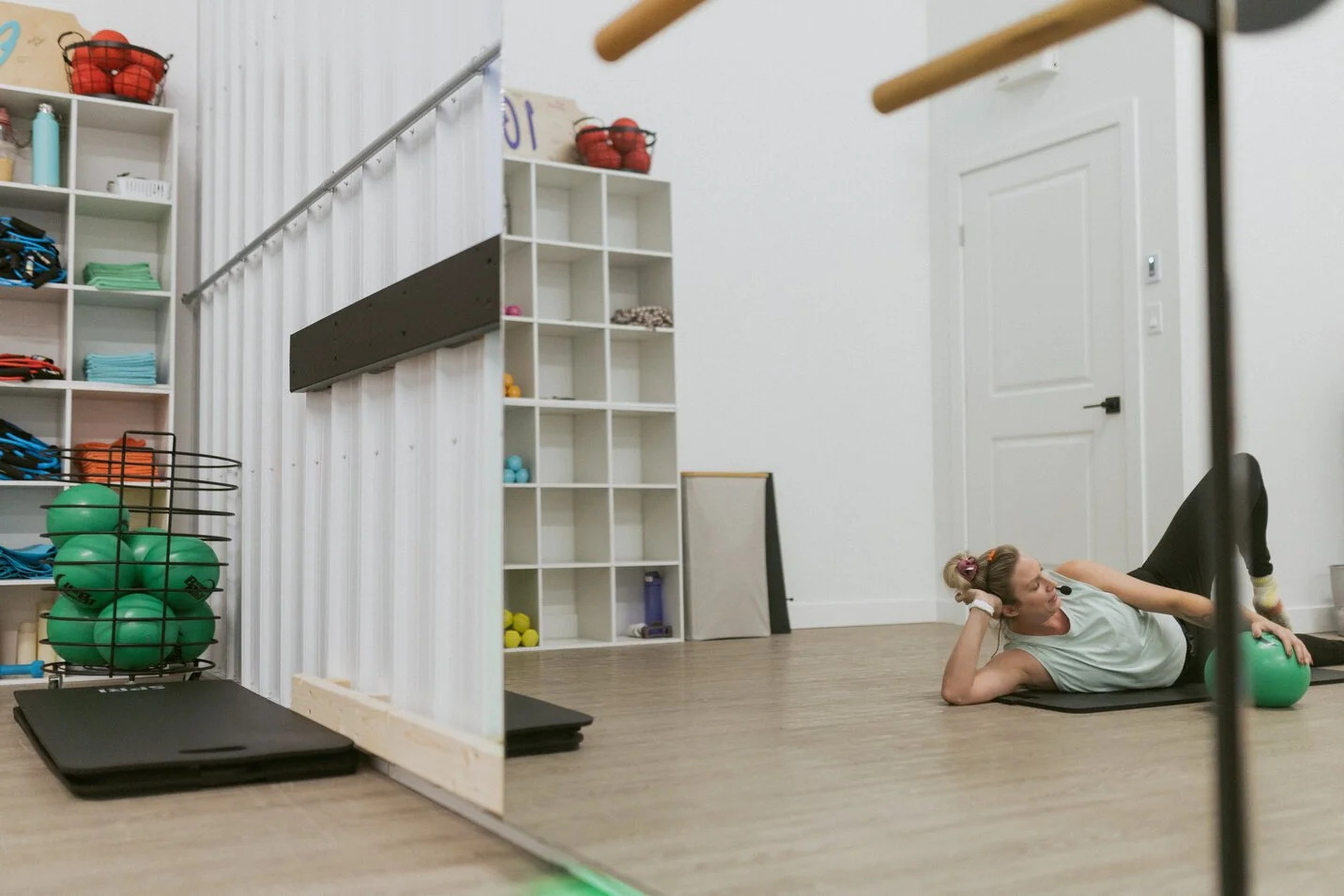
movement as regulation, not punishment
Stop Pushing, Start Listening: 4 Signs Your Body Wants a Kinder Approach to Fitness
Most of us likely didn’t learn about fitness in a loving way. Instead, how we learned about movement came from fear, control, and guilt. But your body is whispering something different. Are you listening?
No pain, no gain.
You “have to.”
Rest means lazy.
All those snacks on Saturday? Time to work those off.
Just push through the exhaustion.
Did any of those statements hit close to home? It’s okay if they did. Notice how you’re feeling after reading those.
There’s a time and place to go hard. To hit the new records and smash your goals. There’s also space for the slowness of life. To rest without earning it. Both are forms of self-care.
Self-care is more than a facial and a quiet glass of wine (we’re not hating; those are definitely needed some days). Intentional self-care goes deeper, including how you speak to yourself and your why for movement.
If those statements above are still floating in your brain, this is for you.
Most of us likely didn’t learn about fitness in a loving way. Instead, how we learned about movement came from fear, control, and guilt. Fear of gaining weight or not meeting standards. Guilt of enjoying life comes with the punishment in your workout the next day.
Your body is whispering something. Are you listening?
Sign #1: Ignoring the Little Aches
Do you catch yourself in the middle of class needing a quick break, but everyone around you is still looking solid? Instead of listening to those tiny whispers from your body, you push through. Everyone else is, so why can’t you?
That’s the hidden challenge with group fitness. Trust us, your instructor has been there too. The pressure to “keep up with the class” is heavy. Sometimes it’s from the class. Most of the time, it’s coming from yourselves.
What starts as a little ache in the thighs on the bike can turn into something much louder. In extreme cases, pushing through those moments of more than discomfort (especially in high-intensity settings) can turn into a beyond-painful burn, leading to conditions like rhabdomyolysis. That is rare, and we’re not trying to scare you. But the message is clear: listen to your body’s signals for support and breaks.
Your body usually isn’t that dramatic. You’ll start to notice little aches in the legs, twinges in the shoulders, heaviness in the abdomen, and tightness in your hips.
Exercise is a good type of stress when done intentionally. If we over-stress them by ignoring their cues, we’re missing the opportunity to hone our interoception skills and respond to what’s happening inside us. It’s through this skill that we develop regulation and long-term progress.
Modifying, slowing down and taking breaks doesn’t mean failure. It’s about you learning to respond to your internal signals rather than override them
Next time your body whispers, honour it with a modification or a pause. It’s not failing your body. You’re building trust with yourself.
Sign #2: Rest Feels Uncomfortable or Earned
Society has done a great job framing “the grind” as something to celebrate and aspire to. That busyness and exhaustion are signs of worth and success. Resting is labelled as lazy.
But rest days are a necessity.
Let that sink in.
Your body needs a balance of intensity and downtime. There’s research on this. Having adequate recovery time (rest) can help regulate cortisol (the stress hormone) and balance your nervous system. Even though exercise is a “good stress,” it can still become overwhelming without adequate recovery.
You don’t need to “earn” those downtime moments. You need to respect them as they come.
The next time you’re feeling tired, refrain your mindset. Because you love and support your body, you’re going to take this time to rest. It’s in those quiet moments that your body heals, and your mind becomes at peace.
Rest is part of the plan. Not a reward.
Sign #3: You Use Movement to Make Up for Something
“I indulged way too much on the weekend, so I need to work extra hard in class to burn off those treats.”
Again, we’ve all been there at some point. We’re trying to break the cycle of how we approach fitness and wellbeing. It won't be perfect, and that’s okay.
There’s no shame in seeing this pattern. You’re human. Awareness of this is something to be proud of.
Here’s the truth. Movement is not a punishment.
It’s a celebration. It’s a form of regulation. It’s support.
What looks like discipline for going hard at the gym after the holidays can entirely change how your session feels. It can backfire if it’s not aligned with what your body actually needs.
Research shows exercise routines stemming from guilt and shame are not only harder to stick to, but they also can block the mental benefits of your movement. The feelings are stress on your body, and we’ve already realized exercise is a type of stress on your muscles. If we recognize that part of our health means enjoying life (including the treats that come with it) while strengthening our bodies, we may increase our chances of making this routine stick.
You’re allowed to live with both elements: enjoyment and discipline.
Sign #4: You Feel More Drained Than Energized After Moving
Workouts are meant to tire your muscles, not exhaust your spirit. Every time you leave class feeling blah instead of empowered, there’s a reason.
It’s time for a shift.
Everything we’ve talked about leads to this moment - your body knows what it’s asking you. It’s time to listen.
When the workout intensity aligns with your body and mind that day, you’ll feel the full mental benefits of your session. The endorphin boost, increased energy, and feeling amazing about yourself are all amazing side effects of fitness.
After your next workout, ask yourself, “Am I feeling tired but accomplished? Or, am I feeling more drained than when I arrived?”
Gentle movement can outweigh high-intensity workouts if they don’t adequately align with your body’s capacity. Listen, adjust and create long-term progress.
Your Mindset Matters
Movement is most effective when it’s approached with choice and care instead of punishment or pressure.
You’re allowed to do it all: enjoy the holidays, weekends or any day of the year. It doesn’t mean you need to “work it off.”
Movement and rest exist to support you, not punish you.
Listen to your body’s cues. To be okay with rest days, and to leave the outside influences at the door when you walk into the studio. You showed up for you, and that’s an act of self-care that deserves to be celebrated.
Movement as Regulation, Not Punishment
What if we shifted our mindset around fitness from punishment to something more encouraging, empowering and supportive? Studies suggest that approaching your workouts with a positive mindset could be the missing piece for consistency.
“No pain, no gain.”
“I need to burn off everything I enjoyed on the weekend.”
“If I can’t walk for a week after my workout, I didn’t work hard enough.”
Heard statements like these before? Maybe you’ve said them yourself. No judgment, because chances are we've all been there at some point.
Some of these sayings have been around for centuries in some capacity. “No pain, no gain,” for example, dates back to ancient Greek and was later popularized by Jane Fonda and her aerobic workout videos. Eventually, ideas like these became deeply embedded in the fitness world.
Does this mindset really work?
Consider this statistic: approximately 80% of fitness routines do not last. That’s a massive number. We’re used to this punishment mindset: you have to do a workout to make up for what you ate over the weekend, or because you missed closing your rings on your watch over the last few days.
What if we shifted from this punishment mindset to a regulatory mindset that works with your body instead of against it? Studies have noted that an exercise routine rooted in positive, internal motivation is more likely to stick. Well, let’s take a deeper look.
What Does Regulation Mean?
What does it actually mean to be regulated?
Simply put, your body has its own internal mechanisms to cope with the stress, including physical stress from exercise, that it inevitably experiences, which is referred to as homeostasis. It’s worth noting that regulation and relaxation are not interchangeable. A regulated body can still be busy, it’s just not in that constant “go, go, go” state.
We’re always going through moments in our day that challenge us. Exercise itself is a form of stress on the body. When you’re able to respond calmly rather than react to the situation at hand, you’re in a regulated state. When those moments arise, and you fall apart? Yeah, you’re likely dysregulated and need to address that (we’ve all been there).
Now that we have an idea of what this all means, how does this relate to physical activity? Dysregulation can manifest physically as tension, guarded muscles, exhaustion, clumsiness, and irritability. Think you’ll be able to get the most out of your session if you’re like this? Probably not. Instead, you’re more likely to cause more muscle tension and increase your risk of injury or prolong your recovery.
Imagine you’re at home studying for the most crucial test that will determine your future. No pressure, right? False - all of the pressure. So, you’re sitting at the table studying while the hockey game is blasting, the dog is barking at the neighbours, and the kids are playing their favourite game, chasing as loudly as they can. If that doesn’t sound hectic, congratulations. You’re a unicorn that has the patience of a saint. For the rest of us, how effectively will you retain all this vital information? You’re not set up for success when you need it the most. You’re more set up to snap.
That’s what it would be like to enter an intense workout session with a dysregulated body. You’re not setting yourself up to succeed in something that is going to put stress on your body, your workout. Instead, you’ve created an environment in your body that needs a reset.
A Punishment Mindset
Now that we understand regulation, let’s discuss a punishment mindset.
Let’s clarify the difference between safely having an intense workout and approaching your session with a negative mindset. What we’re talking about is your why behind your fitness routine.
Everyone has a reason for doing something, including your workouts. It could be to feel stronger, improve your physical and mental health, or serve as an example for your children.
Sometimes motivation comes from a different place. You feel guilty after a weekend of snacks and drinks, an uncomfortable comment about your body, or because life is chaotic and pushing beyond your limits is your only way to feel a sense of control.
Could you catch the drastic difference in mindset? One is rooted in self-love, encouragement and support, while the other comes from pain and punishment.
It’s Time for a Shift
Before anything, a shift needs to happen in the reason for your fitness routine - your “why.”
Consider asking questions like:
“What would help my body function better today?”
“Is my body at a place where this workout is beneficial?”